

How To Repair Cracked Stucco Exterior
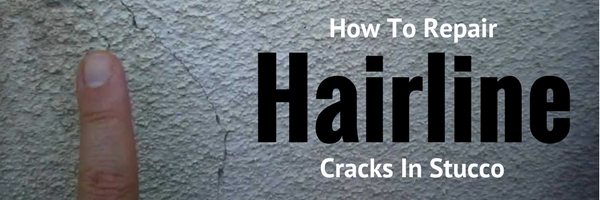
Many homes that accept stucco as an outside coating have bully issues, simply about of them can be repaired quite easily.
There are different kinds of cracks that announced and knowing how to go about fixing them is half the battle.
There are different kinds of cracks, distinguished mainly by their size and design on the wall itself.
One tin can make up one's mind the cause of the crack by looking at the wall'southward design, the size of the crack and the design.
Hairline cracks are anywhere from 1/sixteen of an inch to 1/8 of an inch wide (typically) and are easily and effectively repaired using caulking and paint, in most cases because it is the most economical approach for most people.
What You lot Will Need For This Project:
- Caulking Gun
- Caulk (latex with silicone base is recommended, 40 year) or a sanded caulk, for rougher stucco textures
- There are also tubes that do not require a caulking gun but have much less material in them than a standard tube of caulking
- Bucket of water
- Sponge or Rag
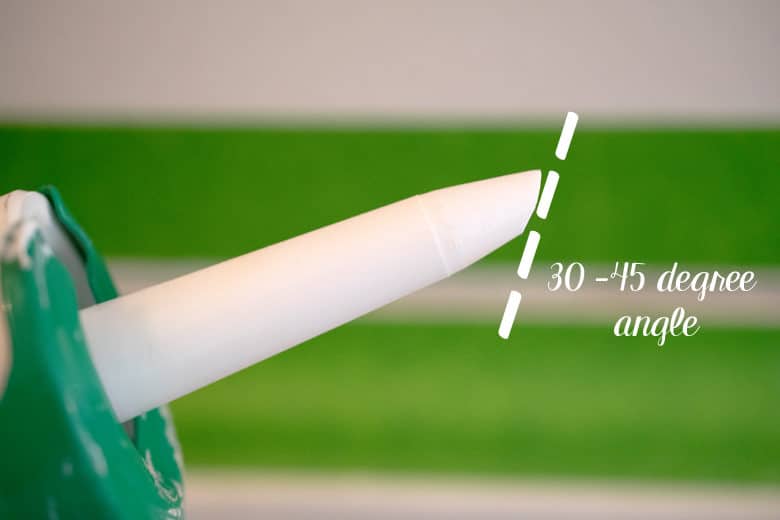
Cutting Tip Of Caulking Tube, Like This:
The first step is to cut the tip of the tube of caulking equally small as possible, at an bending, if possible.
I included this equally a step because it is often overlooked and can brand a huge difference in the corporeality of time it takes to complete the project, how much cleanup there volition exist, the finished product,etc.
And so load the caulking gun with the tube and squeeze out some of the caulking, so your ready to get and have an idea of how much material is going to come out.
cravingsomecreativity.com
Helpful Tip: The smaller the tip, the easier and cleaner it volition exist to utilize the caulking, the less cleanup yous will have to practice and the meliorate the repair will look.
Helpful Tip: If the crack and the surface area effectually the crack has moss, staining or excessive amounts of debris visible, then using a softer wire brush first to remove the debris and clean the area is recommended.
Footstep 1: Moisture The Wall Down Before You Do Anything...
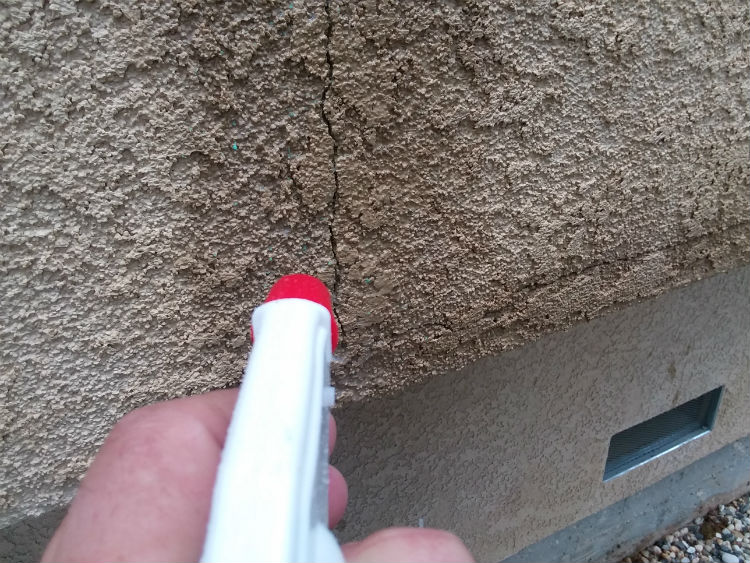
Beginning, you will want to wet down the wall where the fissure is and around the area of the crack.
Water will help with any standing dust in and around the crack and also help to movement the caulk effectually, make it squeeze into the crack and will allow you lot to wipe off the excess a lot easier.
Step 2: Utilise The Caulking To The Crack
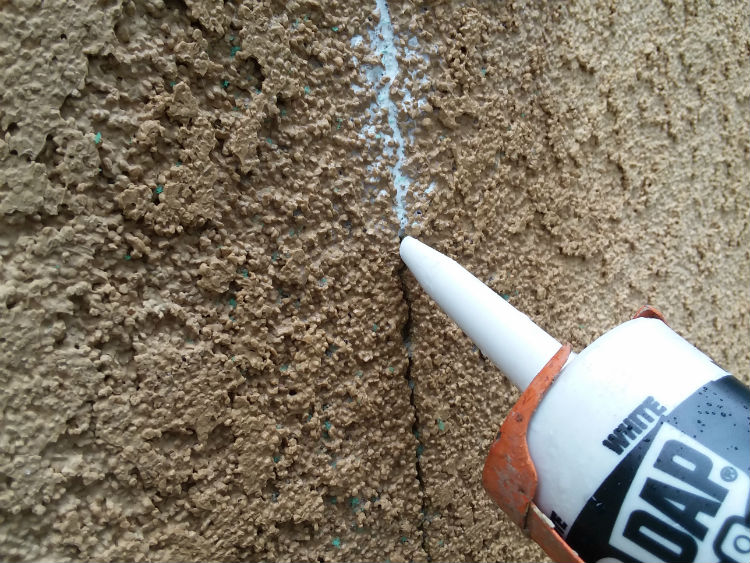
Next, you will want to employ a bead of caulk along the crack in an even and generous manner.
Utilize the angle on the tip to your advantage, it will exist easier to fill the crack this fashion.
Exist certain to have a consequent bead without any gaps, yous will desire the unabridged crevice to be covered in a bead then it is sealed entirely.
After The Caulk Is Applied...
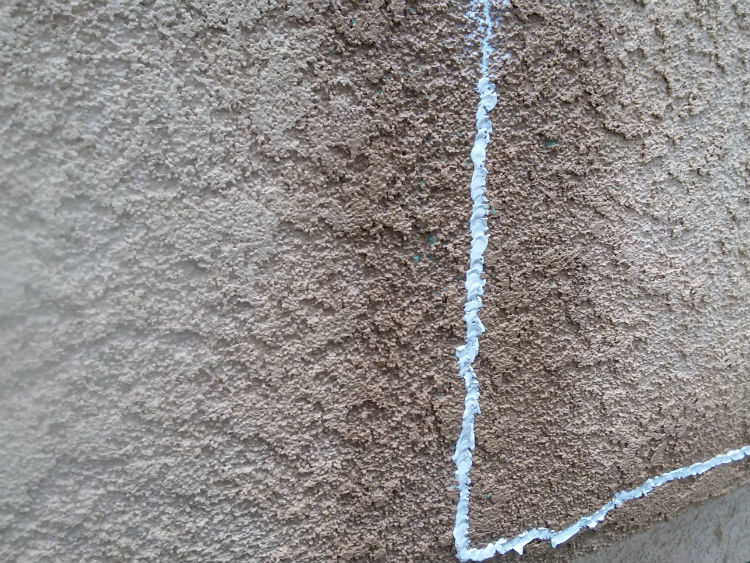
Afterward you lot utilize the caulking, information technology will look something like this (to a higher place photo).
This is where cut the tip of the caulking tube carefully comes in handy, the smaller the scissure, the smaller the opening on the tip of the caulking tube should exist.
This will go along things neat and brand the job come out a lot better in the end.
Footstep three: Spread The Caulking Into The Cleft Using Your Finger:
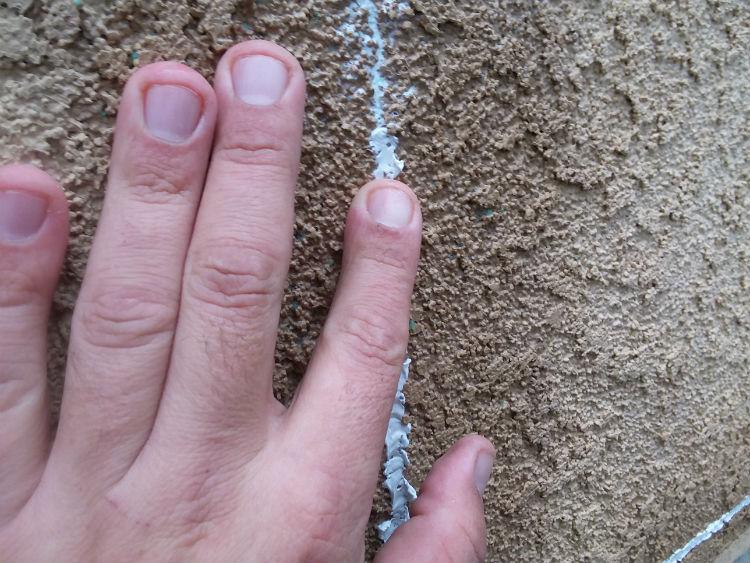
After the caulk is applied, take your finger and rub the caulk into the crack.
Try to go all directions, in order to fill the crevice entirely.
Try to avoid spreading the caulk all over the wall, if you can exercise so, it will make the side by side step much easier.
Footstep four: Wipe Off Excess Caulking
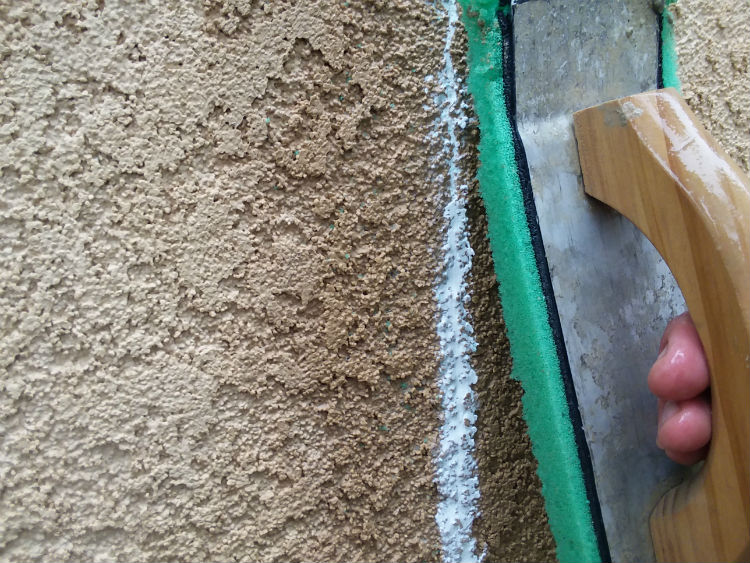
Now, take your sponge, rag or green float and saturate it in the water.
Ring it out a footling bit, but keep most of the h2o inside, information technology is better to take more water than not plenty.
Utilise the rag or sponge to clean up the area around the crack, while keeping the caulking inside of the crack itself.
Do non worry if you are shy on material hither considering we will terminate up applying a 2d coat that is textured and will fill in the rest of the material you need.
Just brand sure that the unabridged crevice is filled and you lot didn't miss any spots, this is critical in this step!
Helpful Tip: The final product should just have the caulking inside the crevice and nowhere else.
Try to clean around the edges as adept as you lot tin can for a better end result.
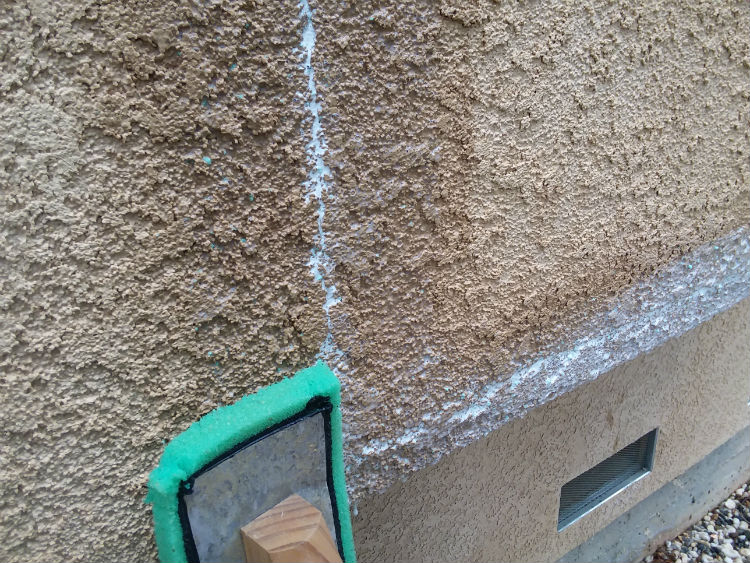
You Will Have Something That Looks Like This:
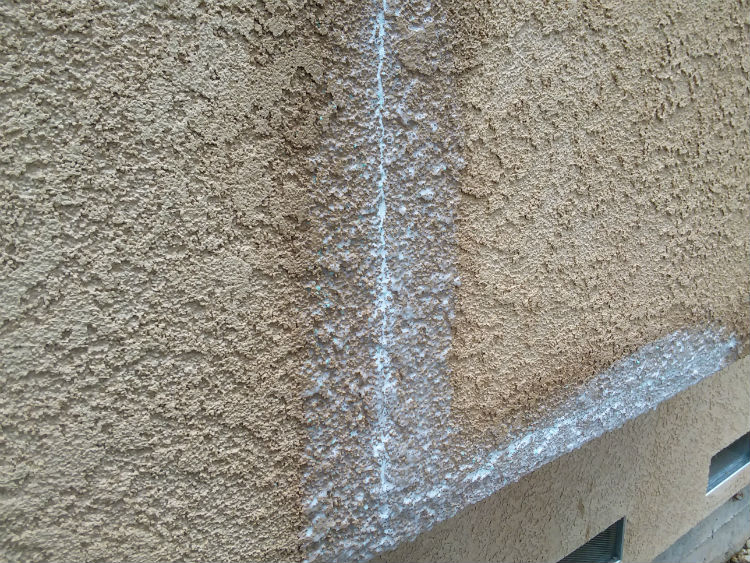
After you wipe off the excess blanket using your light-green float, rag or sponge, yous will accept something that looks a little bit like the picture above.
Most of the caulking is sitting inside the crack which is where we desire it and the watery white residue around the fissure is h2o that has simply a very small amount of caulking in it.
This will have to be removed if you are not planning on painting, otherwise you volition see a slight difference in colour after you are done.
Step v: Clean Off Excess H2o/Caulk Balance Effectually Fissure...
Let The Caulking Dry
Let it dry for a day, or a few hours, depending on the instructions , weather, temperature, etc.
Caulking has a tendency to shrink up a bit, which will work to our advantage, in this case.
We will apply another coat of caulking the aforementioned way we did previously merely add a niggling texture this time around, to friction match the existing texture.
The second glaze of caulking is optional and is normally not carried out by most people, as it takes more time, energy and resources. Sometimes i application of caulking is enough to fix the crack.
Texturing The Second Bead Of Caulking (Optional):
After nosotros use the 2nd dewdrop of caulking and wipe off the excess, we volition want to add a scrap of texture to make the repair blend in a trivial better.
Earlier you try to texture to the wall, play with it on a piece of paper-thin to try and simulate the texture and detect out what methods (dabbing with a brush, using a sponge, etc.) will match the existing texture the best.
- If you take a smooth texture, and so this volition be easier to do and will only require (in most cases) to proceed reapplying caulking until it is flush with the finish and make sure at that place are no "hard lines" in the caulking, everything should alloy in naturally.
- For moderately heavy to heavier textures, a brush used in a dabbing motion would friction match the existing texture better.
Experiment start, similar I mentioned earlier to see what method works the best for your texture. A sanded caulk would piece of work better for rougher stucco textures and be easier to attain a more than seamless repair.
Step half dozen: Apply Color To The Repair (Optional):
For the repair to be consummate, you will demand to employ a matching colour glaze on top of the area you fixed and possibly the entire wall, so it blends in better.
Virtually folks just pigment the wall and is probably the easiest method and well-nigh cost constructive i.
If you want to avert painting, then look into a fog glaze (traditional cement based stop) or an acrylic terminate that was used on your home (custom color matched) that has the aggregate taken out of information technology.
Y'all can achieve this by running the cloth through a mesh paint screen, which will proceed the color in tact but remove the aggregate to make a custom acrylic paint.
Helpful Tip: Information technology is hard to friction match the color of stucco exactly.
Information technology is porous and the color matching programs that are used these days volition pick up on the "shadowing effects" that the uneven surface of the finish has.
Keep this in heed if you are planning on painting and need to have your stucco color matched.
Helpful Video That Explains The Basics Involved:
Related Posts
The Stucco Guy
My proper name is Ryan and I have been in the construction trades for many years at present and I feel that there is a huge "knowledge gap" when it comes to particular trades.... like stucco. I hope y'all find the information here useful. Thanks for stopping by!

Source: https://thestuccoguy.com/repairing-hairline-cracks-in-exterior-stucco/
Posted by: matsonmoseect.blogspot.com
0 Response to "How To Repair Cracked Stucco Exterior"
Post a Comment